 English
 Español
 Portugues
 Pусский
 Français
 Italiano
 Türk dili
 हिन्दी
 Tiếng Việt
 中文
中文 қазақ
қазақ עִברִית
 မြန်မာ
 українська
 беларускі
 ພາສາລາວ
 o'zbek
 Монгол



Muntu ya ke salaka kisalu ya kutunga na ntoto ya mvimba
Underground Excavators: Engineering Marvels for Subsurface Construction Underground excavators are specialized heavy machinery designed for digging, tunneling, and material removal in subsurface environments. These robust machines play a critical role in modern infrastructure projects, including metro systems, sewage networks, utility tunnels, and mining operations. Unlike traditional surface excavators, underground excavators are engineered to operate in confined spaces, often under challenging conditions such as limited visibility, poor ventilation, and unstable geology. Design and Features Underground excavators are compact yet powerful, with reinforced structures to withstand high-pressure environments. Their design prioritizes maneuverability, often featuring articulated booms, zero-tail swing configurations, and low-profile undercarriages to navigate tight tunnels. Many models are equipped with advanced hydraulic systems for precise control, enabling operators to perform delicate tasks like rock breaking or debris removal without destabilizing the surrounding strata. To ensure safety, these machines incorporate explosion-proof components, dust suppression systems, and enhanced cooling mechanisms to handle high temperatures. Some variants use electric or hybrid power systems to reduce emissions in poorly ventilated areas. Additionally, ergonomic cabs with noise insulation and advanced monitoring interfaces help operators work efficiently in harsh conditions. Applications 1. Urban Tunneling: Used in subway and road tunnel construction, these excavators minimize surface disruption while maintaining high productivity. 2. Mining: In hard-rock or soft-soil mining, they facilitate ore extraction and passage development with minimal ground disturbance. 3. Utility Installation: Ideal for laying pipelines, cables, or sewage systems beneath cities without extensive trenching. 4. Emergency Rescue: Modified excavators assist in disaster response, clearing collapsed tunnels or mines. Challenges and Innovations Operating underground presents unique challenges, such as rock bursts, water ingress, and gas leaks. Modern excavators integrate IoT sensors for real-time monitoring of stability, air quality, and machine health. Automation and remote-control capabilities further enhance safety by reducing human exposure to hazardous zones. Conclusion Underground excavators are indispensable in shaping the subterranean world, combining power, precision, and adaptability. As urbanization and resource demands grow, continuous advancements in automation, energy efficiency, and material science will further elevate their role in sustainable underground development. These machines exemplify engineering ingenuity, enabling progress where traditional methods fall short.
Bima
kitini:
-
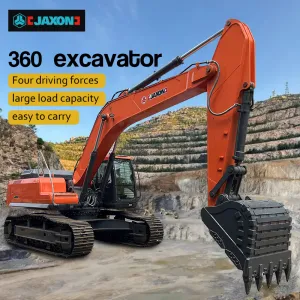
360 Essante ya nsi ya ntoto
Kukabula: Muntu ya ke katulaka bantu na kisaluNtalu ya bantu me tala: 91Ntalu:Kilumbu ya kubasika: 2025-11-03 17:28:46Ntuadisi ya mvimba ya ba nsangu 360: Bikalulu, Ba application, mpe Kubongisa . Muntu 360 yina ke salaka kisalu ya kuteka bima, yina bo ke bingaka mpi muntu yina ke salaka kisalu ya kukatula bima yonso, kele kitini ya masini ya ngolo yina ke sadilaka mingi na kutunga, na kuzwa matadi ya ntalu, na kisalu ya bilanga, mpi na kufwa. Zina na yo me katuka na makuki na yo ya kubalula badegre 360 ya mvimba, yo ke pesaka nzila ya kutimuna, ya kutombula, mpi ya kusadila bima. Mukanda yai ke sosa kuzaba mambu ya mfunu, mutindu ya kusadila yo, mpi mutindu ya kuyidika mambu sambu na bantu 360 yina ke sal...
Nsangu
kitini:
Ba mvutu ya kusosa kele ve!
Mambu
kitini:
Ba mvutu ya kusosa kele ve!
Bavideo
kitini:
Ba mvutu ya kusosa kele ve!
Kubaka
kitini:
Ba mvutu ya kusosa kele ve!
Kubaka bantu na kisalu
kitini:
Ba mvutu ya kusosa kele ve!
Bima ya bo ke lomba
Ba mvutu ya kusosa kele ve!



 Nki
Nki Telefone